
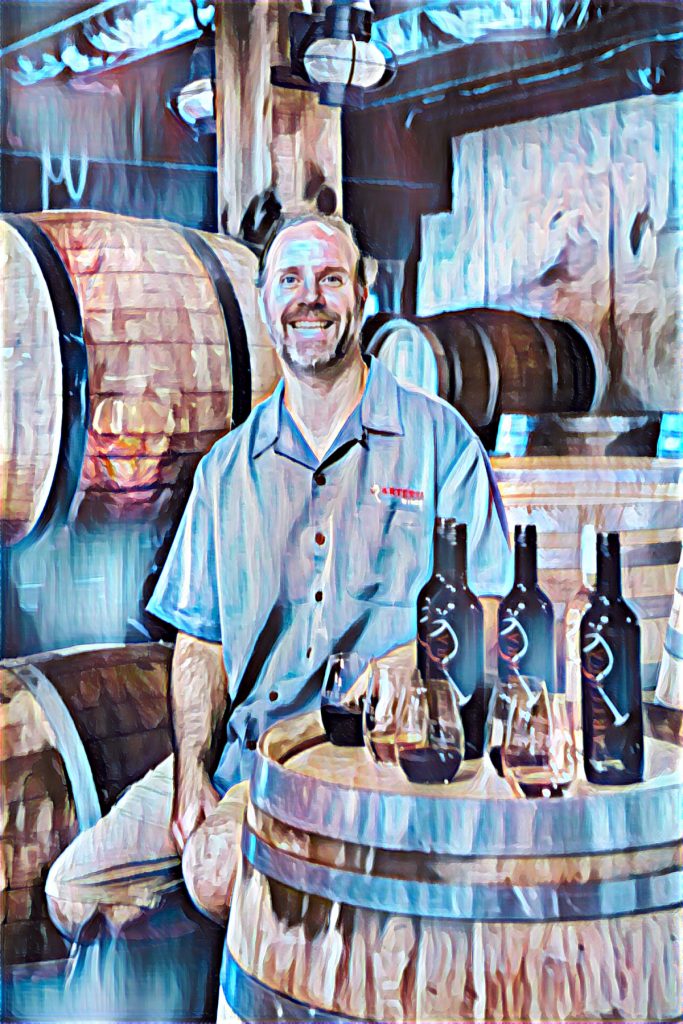
Jason Murray is the winemaker at Arterra Wines in the Blue Ridge Mountains in Delaplane, Virginia. His lifelong passion for agriculture began with raising sheep through 4-H and working on local farms, eventually leading him to horticulture. He earned B.S. and M.S. degrees in Horticulture and worked as a commercial horticulturist specializing in viticulture in Northern Virginia.
Jason spent 10 years establishing and operating a vineyard and winery in Fauquier County before joining his wife to create Arterra Wines & Hawkmoth Arts, combining their artistic interests and shared appreciation for nature. Highly trained in viticulture, Jason also brings 20 years of self-guided winemaking experience and a reputation for producing clean, terroir-driven wines of exceptional quality. Media Inquiries: Jason Murray arterrawines@gmail.com | https://www.arterrawines.com/
What’s the ONE THING most unique, authentic, & memorable about your brand?
Arterra—“The Art of the Land”—embraces Wabi Sabi, the Japanese philosophy that finds beauty in imperfection, impermanence, authenticity and the natural world. For us, that means allowing the vineyard and vintage to speak for themselves.
Arterra brings Old World depth together with New World freshness, producing wines that are clean, natural and unmistakably Virginia. We believe great wine can be both clean-crafted and intriguing, without the funk sometimes associated with natural wine.
Our vineyard is in its second year of organic-compliant farming and is scheduled to complete certification in August 2027. If successful, Arterra will become the first certified organic Vinifera vineyard in the Mid-Atlantic—a significant milestone in pioneering Virginia viticulture. The goal is simple but ambitious: legendary wine that could only come from Virginia.
Describe how and what you’d do with your winemaking career or winery business if you were not constrained.
Our focus is simple: organic grapes and clean, terroir-driven wine. What’s frustrating is that most people have never had access to wines like ours—wines with authentic expression, vivid flavor and complexity, without the drawbacks of homogenized industrial production. You should taste the grape, not the manufacturing.
We currently operate as a classic “mom and pop,” wearing every hat. That has allowed us to maintain complete control over our vineyard, winemaking and philosophy, but it also keeps us small. With the right investment, we could expand the vineyard, bring in help with administration, marketing and sales, and allow me to focus on organic vineyard management and hands-on winemaking.
The goal isn’t to become “Mega Big.” It’s to make these wines more accessible and give them a chance to compete beyond our tasting room. For now, we stay small but mighty—and, as they say, good things come in small packages.
What is the One Wine most emblematic of your brand and/or winemaking style? Tell us its story.
Our Petit Verdot captures the grit of passionate diligence—consistently impressive, intriguing, and unmistakably Arterra. It represents what we believe Virginia is capable of: a wine that delivers year after year, yet still feels like a Cinderella story.
Dark, dense, and jammy up front, it finishes mellow and clean, drawing you back for another sip. For us, it embodies everything we love about Arterra, Virginia and our site in the Blue Ridge Mountains of Fauquier County.
Petit Verdot also makes sense for our region. Its natural characteristics allow it to thrive in Virginia’s challenging conditions, making it remarkably well suited to our warm nights, wet soils and variable climate. After two years of organic-compliant farming, it has proven both resilient and promising. I’ve been told more than once that this wine brought people to tears—that they didn’t know wine could be like this. That says everything. I believe Petit Verdot is the future of greatness for Virginia wine. Read my review of this stellar Petit Verdot here.
Bonus Question: Why Winemaking?
Wine is magical. And it’s a natural progression for me. I grew up in traditional agriculture, and then horticulture. Typically, that is simply “how do I grow more crop at less cost”. But as a farming focused viticulturist – I am intrigued about the spectrum of goals possible in a vineyard. In my case, it is the highest quality fruit that can be achieved. VIVID. And when I first made wines with commercial yeast, I was disappointed at their simplicity and lack of distinctive character, as I could taste so much more interesting things in the grapes than were showing up in the wines.
I explored, implemented, and concluded that Native Yeast unlocks so much more of what is in the grapes. I am intrigued that grapes are one of few fruits that naturally harbor yeast, meaning this is a process that nature created. And when done without additives and chemistry, the resulting antioxidants and health benefits are impressive, plus the interconnectedness with people and the culture it creates is unparalleled throughout history.