
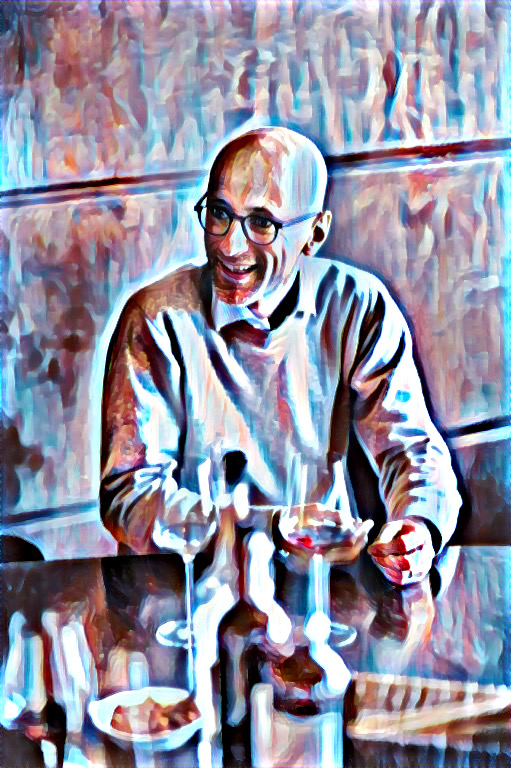
Alessandro Ceretto is Head Winemaker and a third-generation member of the Ceretto family in the Langhe Region of Piemonte, Italy. The son of Marcello Ceretto, Alessandro joined the family winery in 1999 after graduating in Enology from the University of Turin in Alba and gaining experience in leading wine regions around the world. Today, he oversees winemaking across Ceretto’s four Langhe estates. He is driven by the goal of continuously improving quality through technical excellence, assembling a highly qualified winemaking team, and encouraging ongoing collaboration with experts from around the world, while upholding the family’s commitment to organic and biodynamic viticulture.
Media Inquiries: fgubernari@colangelopr.com | https://ceretto.com/
What’s the ONE THING most unique, authentic, & memorable about your brand?
Ceretto is fundamentally a Piedmontese family business, shaped by the history, hard work, and resilience of the Langhe. Our heritage keeps us rooted in the land, while our culture drives curiosity, openness, and a willingness to push boundaries without losing our identity.
In the 1960s, long before the Langhe became world famous, our family recognized that individual hillsides produced distinct expressions of Nebbiolo. We became pioneers of single-vineyard Barolo and Barbaresco, acquiring prized Crus including Bricco Rocche, Brunate, Cannubi, Prapò, Asili, and Gallina. We were also early advocates of environmental stewardship, ultimately converting 100% of our estate vineyards to certified organic farming.
That connection to the land extends beyond wine. We founded three-Michelin-starred Piazza Duomo in Alba with Chef Enrico Crippa and have integrated contemporary art into the landscape, from the Cappella delle Brunate to artist residencies and works by Sol LeWitt, David Tremlett, and Francesco Clemente.
For Ceretto, wine is an act of culture—rooted in heritage, respect for nature, food, art, and conversation. Our identity is deeply rooted in the Langhe, but never standing still.
Describe how and what you’d do with your winemaking career or winery business if you were not constrained.
If I had zero constraints, my dream as a winemaker would be to push my idea of winemaking and pure terroir expression to its absolute limit—minimizing or even completely eliminating human intervention. I would then challenge myself in entirely unfamiliar contexts around the world, not to replicate the Langhe, but to decode new frontiers—discovering which grapes can thrive there and express the true, unvarnished soul of those distant soils. Without limits, winemaking becomes pure exploration. We must step back so that the land can speak with absolute, uninhibited clarity.
What is the One Wine most emblematic of your brand and/or winemaking style? Tell us its story.
If you could try just one wine to truly understand the soul of the Ceretto family and our winemaking philosophy, it has to be our Barolo DOCG Bricco Rocche.
Bricco Rocche is much more than just a wine to us—it is the cornerstone of our history and identity. Back in 1982, my family made a bold and revolutionary choice for the Langhe: we decided to build a winery dedicated entirely to single-vineyard (cru) Barolos, diving deep into the unique expressions of individual soils long before it was common practice.
The site itself is exceptional. Bricco Rocche is Barolo’s smallest cru, located right in the heart of the appellation in Castiglione Falletto, and it is an exclusive monopole—meaning the Ceretto family is the sole owner and the only producer who can use this name. Geographically and emotionally, it sits at the center of our world; it is literally the house where I spent my childhood.
When you taste Bricco Rocche, you are tasting the legacy that began with my grandfather. It captures our deep obsession with terroir, elegance, and unicity—transforming the power of Nebbiolo into a wine of incredible harmony, transparency, and grace. Read my review of this excellent Barolo.